Orra 
Team: @emjayrentarou
Submitted: March 31, 2026
Answer Capsule
What if your tarot reading could be magical and verifiable at the same time? Orra turns live Pyth Price Feed data into market context, commits that snapshot on-chain, and uses Pyth Entropy for a fair card draw. Users get an experience that feels personal while delivering transparent data and trust they can verify.
What It Does
Most tarot apps feel generic because outcomes are opaque and disconnected from the moment. Orra links each reading to real-time Pyth data and on-chain proof, then uses Pyth Entropy to generate the card fairly. The result is a reading experience that feels meaningful, modern, and trustworthy.
Pyth Features Used
- Price Feeds (on-chain or off-chain)
- Entropy (randomness)
- Both
Links
- Live Demo: https://orra-pyth.vercel.app/
- Source Code: GitHub - emjaycodesss/orra · GitHub
Screenshots / Media
I. Dashboard
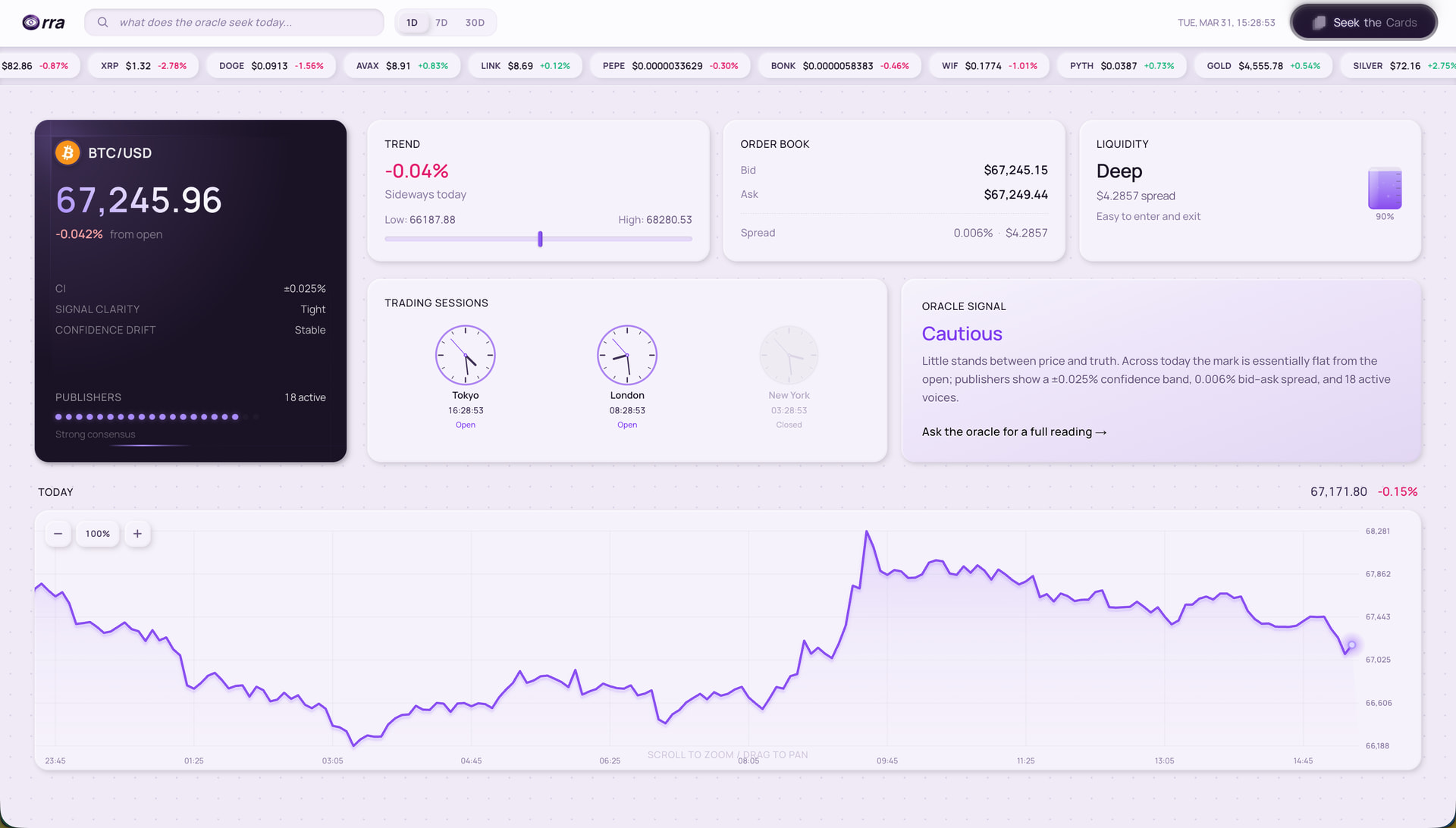
Once you open Orra, you land on the dashboard where you can search assets, view live Pyth market signals, and scan the price chart. From there, click/tap Seek the Cards to start your reading flow.
II. Wallet Connect

Next, users enter the reading gateway, where they connect their wallet to continue. This step confirms identity before starting the on-chain tarot flow and unlocks the personalized reading journey.
III. Asset Selection
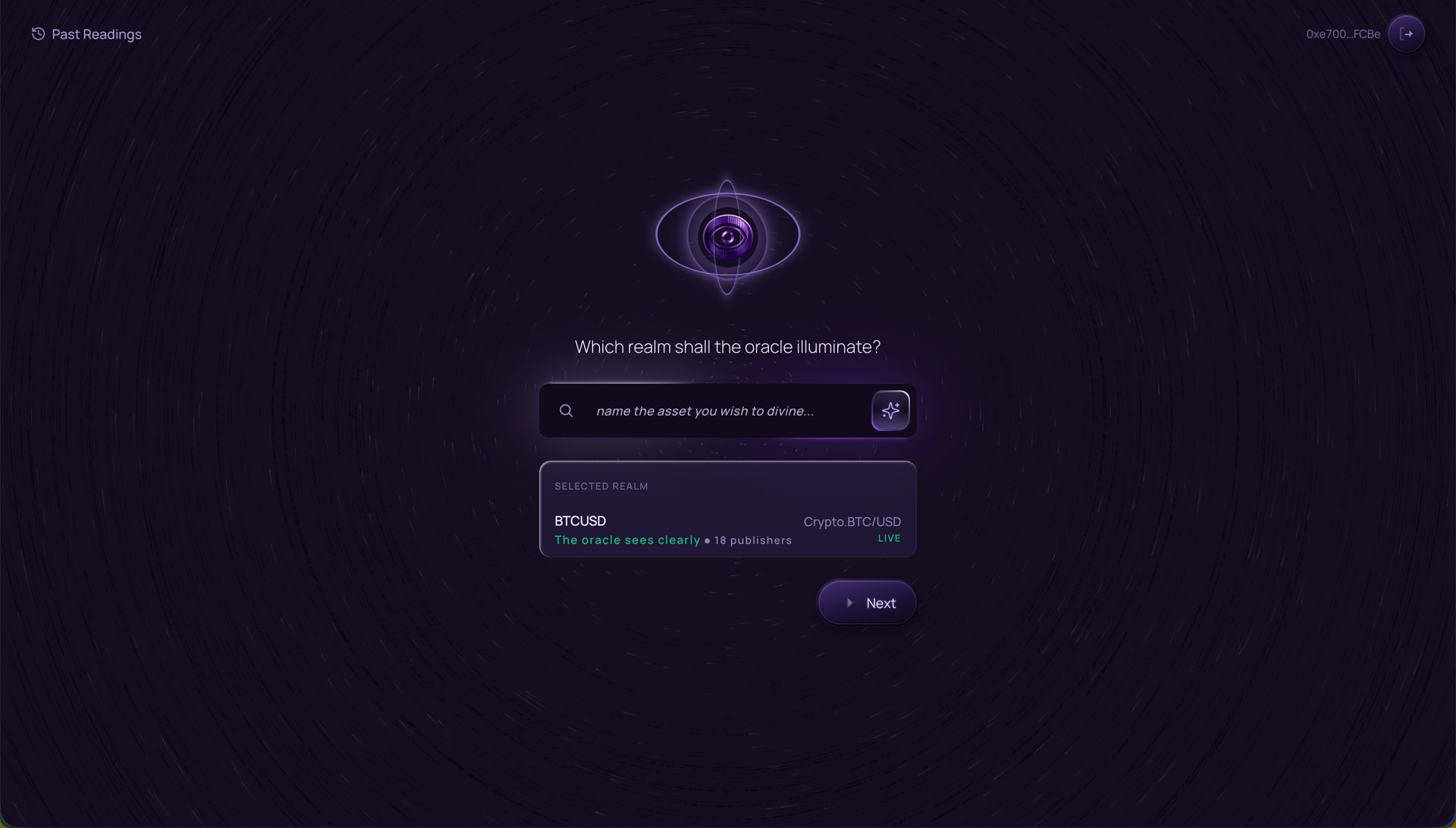
Users choose the asset for their reading, and Orra confirms the live Pyth feed before moving to the next step.
IV. Question Flow
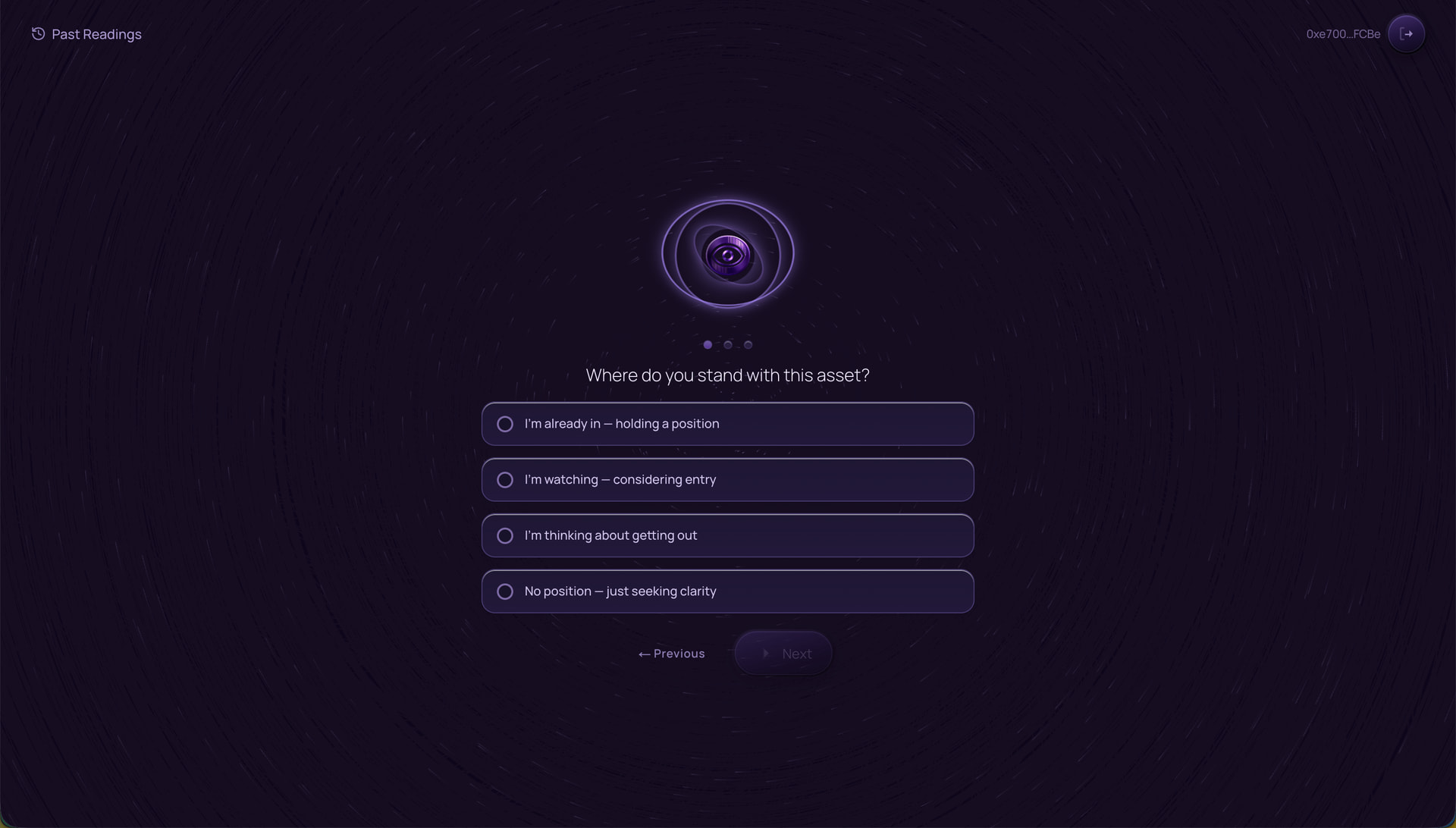
Users complete a guided sequence of questions covering market situation, timing, and focus. Question paths adapt by asset category, so Orra tailors each reading before the on-chain draw.
V. Oracle Commit
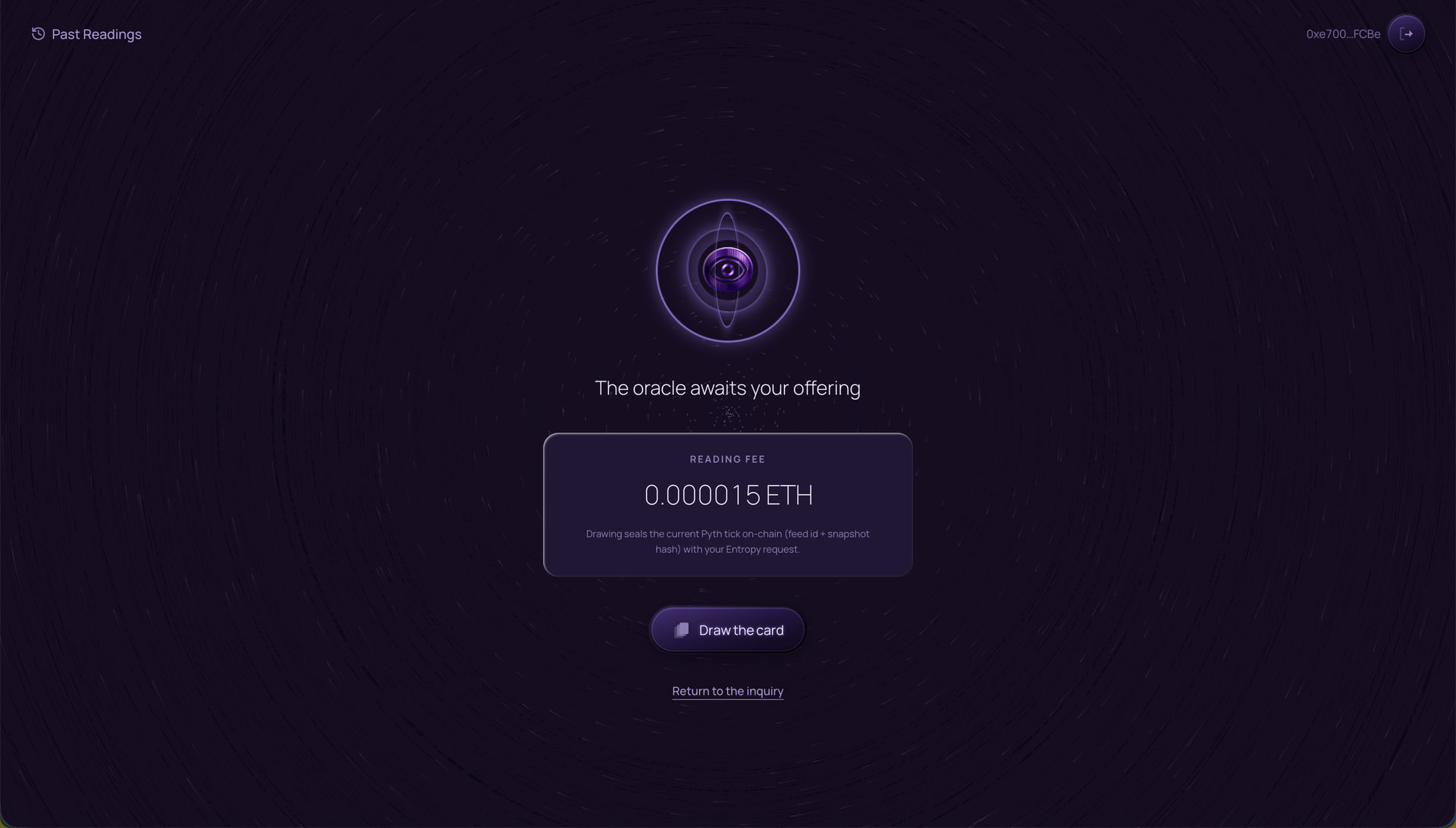
Users confirm the reading fee and trigger the draw, which commits the live Pyth market snapshot on-chain and requests Pyth Entropy randomness.
VI. Card Draw
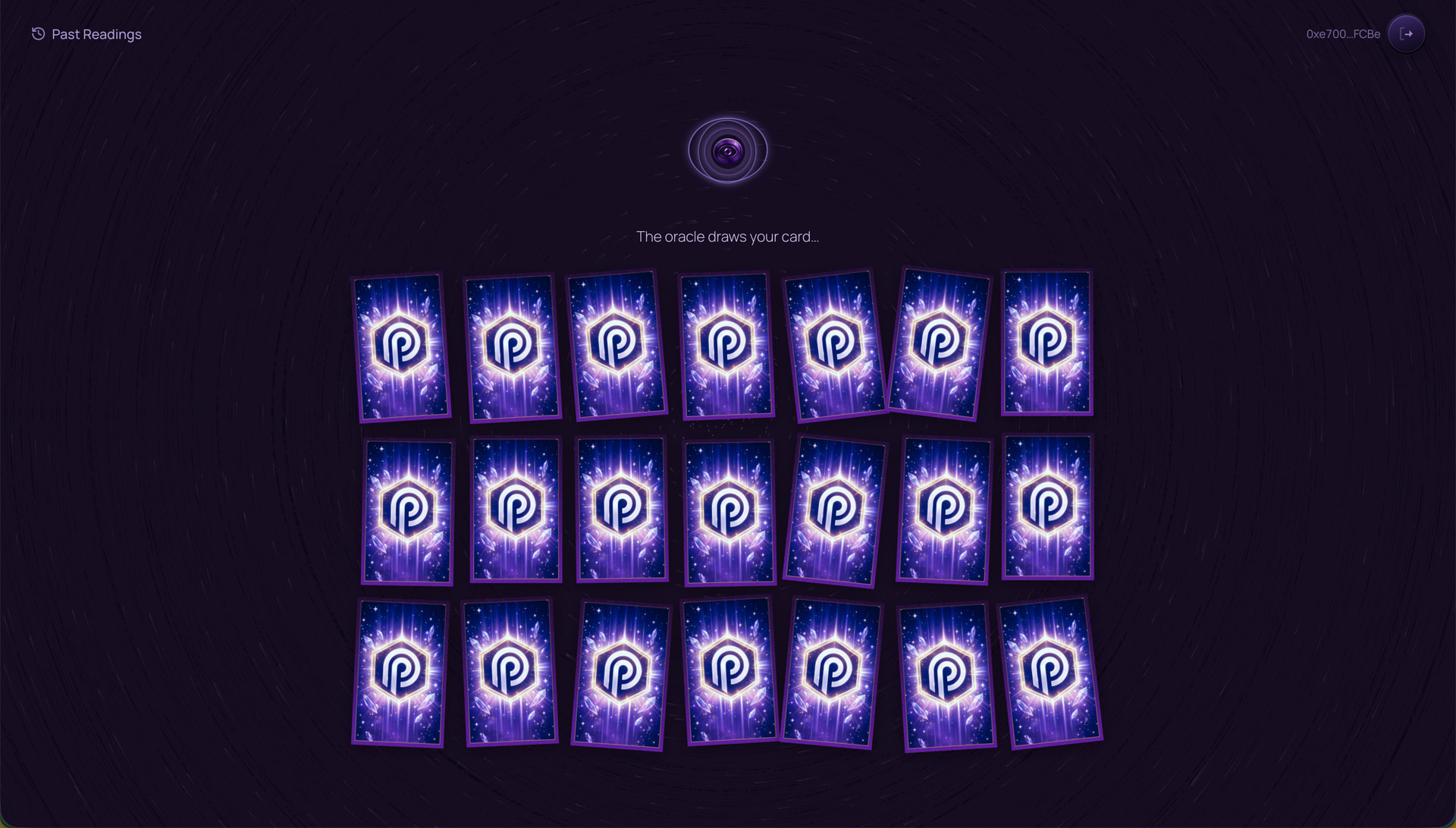
Orra reveals one card from the deck using Pyth Entropy randomness, producing a fair and verifiable result tied to the committed market snapshot.
VII. Reading Result
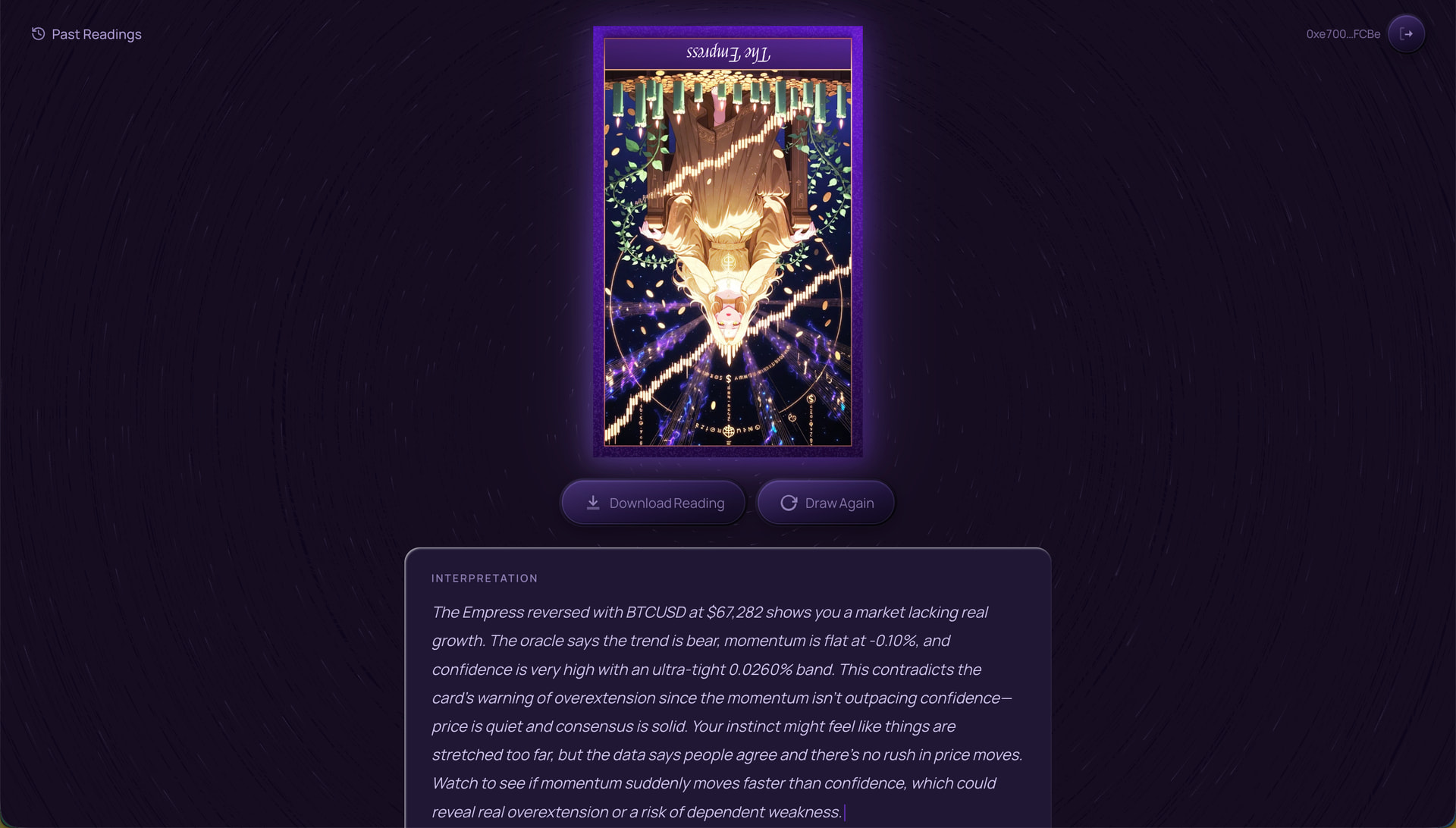
The final screen shows the revealed card, a market-grounded interpretation, and a verifiable on-chain receipt tied to the committed Pyth snapshot and Entropy draw. Card orientation is also derived from the same Entropy output, where a deterministic bit check sets upright or reversed.
VIII. Shareable Reading Card
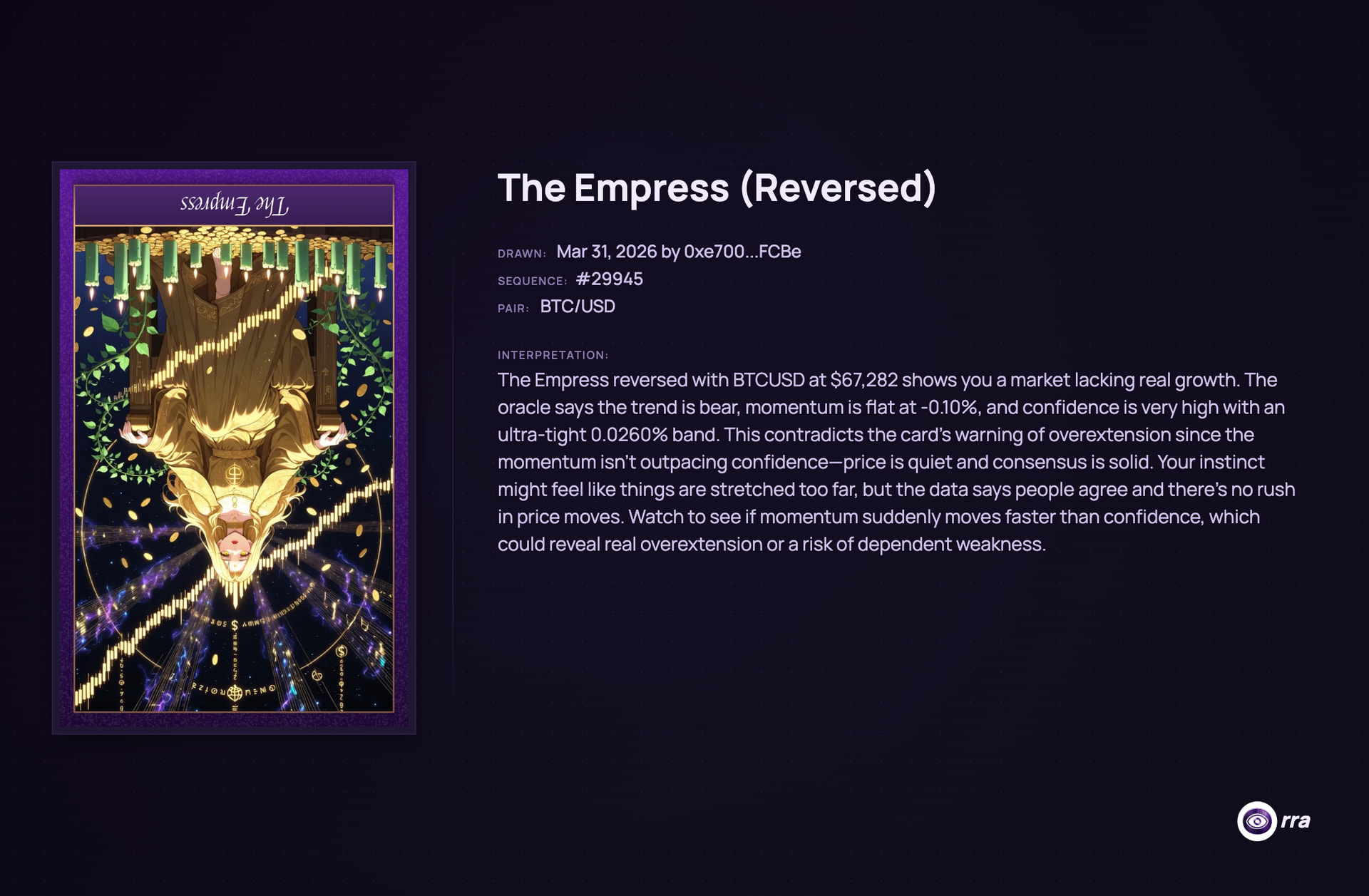
The Download Reading button generates a share-ready image with the card so users can post their reading on social platforms or send it to friends.
IX. Reading History
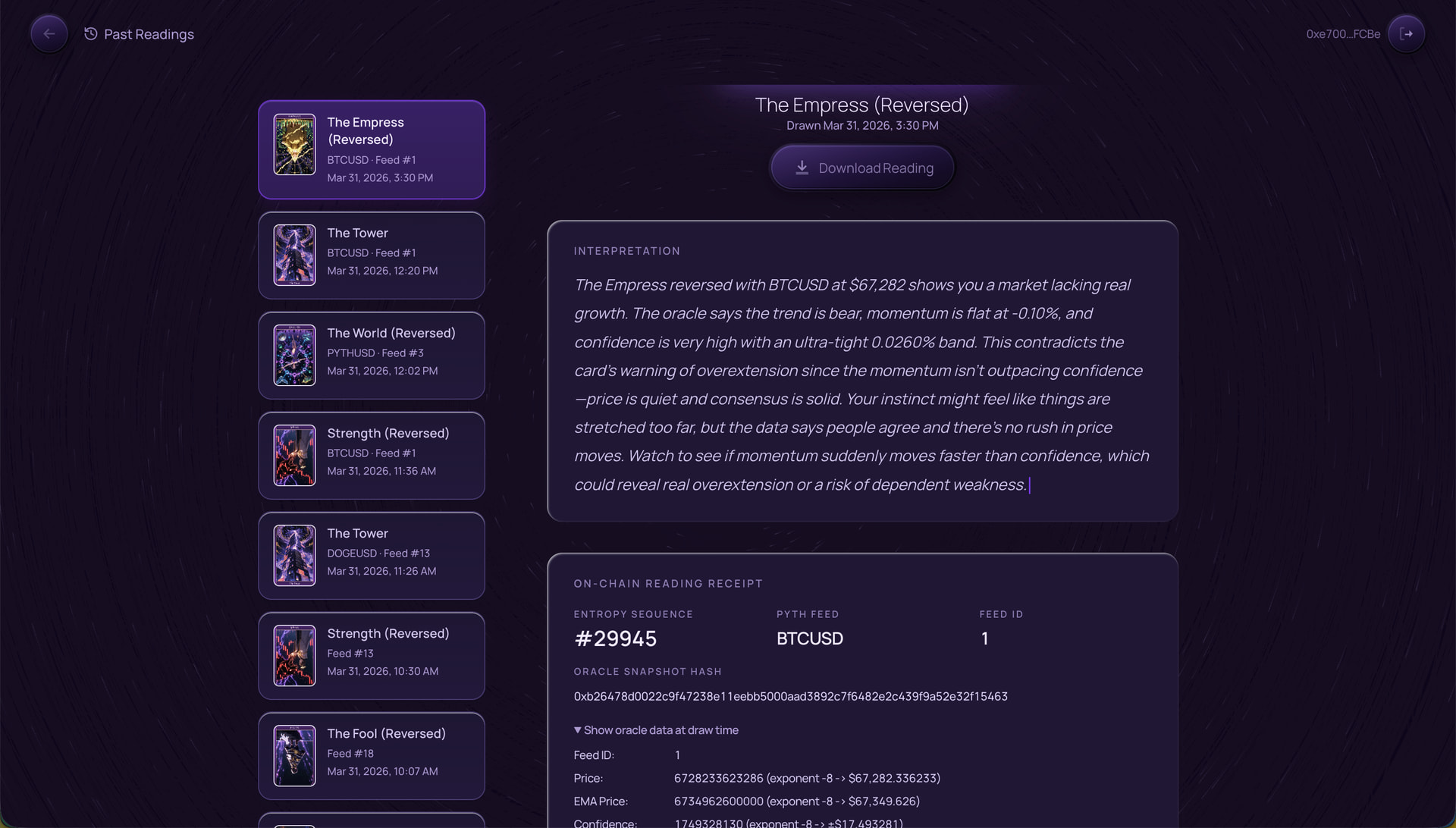
Users can revisit past readings with full context, including interpretation, card outcome, and on-chain receipt details that verify the Pyth snapshot and Entropy sequence used for each draw.
X. Card Catalog
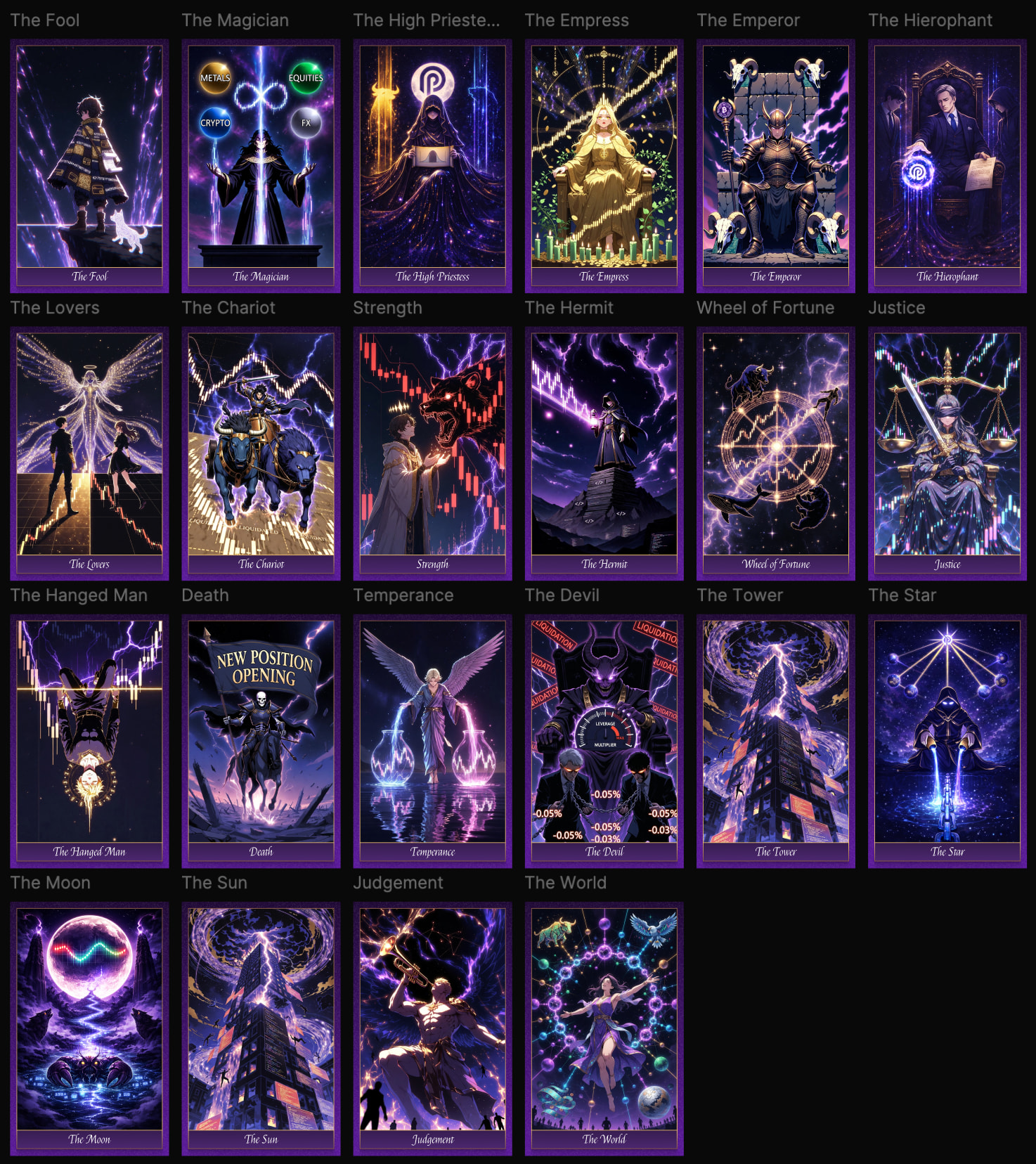
Here are all the cards you can possibly draw in Orra right now, with more to come in future updates. Have fun exploring and enjoy your readings! :>
PS: If you want to test the app, it is currently on Base Sepolia testnet. Drop your wallet address and I can send you some ETH. Thank you!!
If you run into any issues or bugs, or have ideas for improvements, please let me know.
Tech Stack
- Framework/Language: Next.js 15, React, TypeScript, Tailwind CSS
- Blockchain: Base (Sepolia default), Solidity 0.8.24, Foundry, wagmi, RainbowKit, viem, ethers
- Agent Framework (if applicable): N/A (LLM provider integrations only)
- Deployment: Vercel; contract deployed with Foundry
Content Contributions (Required)
- Public Post (Dev.to): https://dev.to/emjayrntr/i-built-orra-a-tarot-app-powered-by-pyth-for-verifiable-market-readings-3p31
- Technical Contribution (GitHub gist): https://gist.github.com/emjaycodesss/126661700222e845cfc92d5aff63122c
- Bonus - X Platform Post: https://x.com/emjayrntr/status/2038944211844673674?s=20
- Bonus - Wikipedia Contribution: https://en.wikipedia.org/wiki/Blockchain_oracle (Pyth mentioned under examples)
Licensing
This project is licensed under Apache 2.0.
Eligibility Confirmation
- I am 18+ years old
- I am not located in an OFAC-sanctioned jurisdiction
- I confirm this is an original work created during the hackathon period
- I have read and agree to the Terms & Conditions